
>> Continued From the Previous Page <<
“So we go back to the United States, having not come to an agreement. We’ve made very clear what our red lines are, what things we’re willing to accommodate them on and what things we’re not willing to accommodate them on,” Vance added. “And we’ve made that as clear as we possibly could, and they have chosen not to accept our terms.” His statement underscored a broader message: Washington is willing to negotiate, but not at the expense of its core national security priorities.
WATCH:

Throughout the lengthy talks, Vance revealed he remained in near-constant communication with President Donald Trump, highlighting how closely the White House monitored developments in real time. “I don’t know how many times we talked to him — a half dozen times, a dozen times over the past 21 hours,” Vance said, illustrating the intensity and importance of the negotiations.
The vice president also pointed to a broader team effort behind the scenes. Key figures such as special envoy Steve Witkoff and senior advisor Jared Kushner were directly involved, while top officials including Secretary of State Marco Rubio and Defense Secretary Pete Hegseth remained actively engaged throughout the process.
“So, look, we were constantly in communication with the team because we were negotiating in good faith,” Vance told Fox. “And we leave here with a very simple proposal, a method of understanding that is our final and best offer. We’ll see if the Iranians accept it.” The statement suggests that while talks have paused, the door has not been entirely closed—though the burden now falls on Iran.
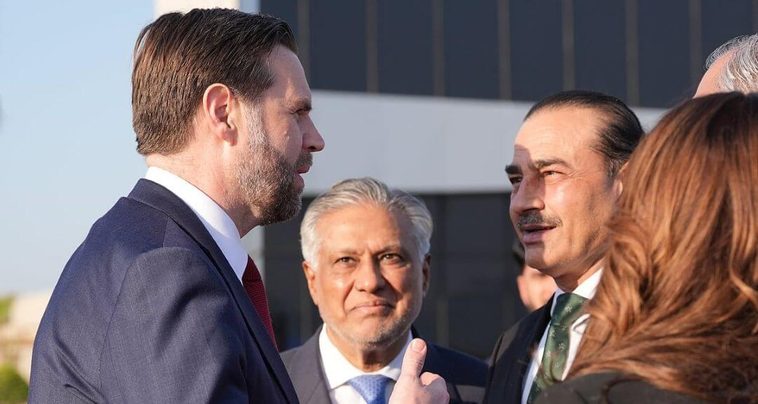
Vance had traveled to Pakistan earlier in the weekend to spearhead the discussions, which were aimed at preserving a fragile ceasefire brokered earlier by Trump and preventing further escalation in an already volatile region. On the Iranian side, negotiators included Foreign Minister Abbas Araghchi and Parliament Speaker Mohammad Bagher Ghalibaf, signaling the seriousness of the talks.
While Vance declined to detail every point of contention, he made clear the central sticking point: Iran’s nuclear ambitions. The United States, he said, is demanding firm and verifiable guarantees that Tehran will not pursue nuclear weapons capability under any circumstances.
“The simple fact is that we need to see an affirmative commitment that they will not seek a nuclear weapon, and they will not seek the tools that would enable them to quickly achieve a nuclear weapon,” Vance said. “That is the core goal of the president of the United States. And that’s what we’ve tried to achieve through these negotiations.”
Meanwhile, President Trump took to Truth Social with a sharply worded message aimed at Iran’s leadership. In a series of blunt remarks, Trump suggested Tehran is negotiating from a position of weakness while attempting to leverage global shipping lanes for influence. “The Iranians don’t seem to realize they have no cards, other than a short-term extortion of the World by using International Waterways,” Trump wrote Friday.
“The only reason they are alive today is to negotiate!” Trump added. He continued by asserting that Iran’s military capabilities have been severely degraded, writing, “Their Navy is gone, their Air Force is gone, their Anti Aircraft apparatus is nonexistent, Radar is dead.”
Trump further claimed that Iran’s missile and drone infrastructure has been “largely obliterated,” along with its stockpiles, and suggested that long-standing leadership figures within the regime are no longer in power. The comments paint a stark picture of a nation under pressure, even as diplomatic efforts appear to have stalled—for now.

