
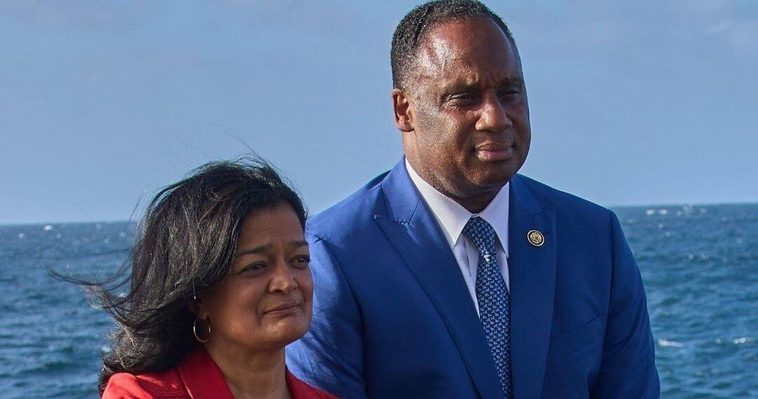
Two Democratic members of Congress are under scrutiny after publicly suggesting that Cuba released more than 2,000 political prisoners over the Easter period — a claim that appears to collapse under basic verification by human rights monitors who say not a single political detainee was actually freed.
The controversy centers on Rep. Pramila Jayapal and Rep. Jonathan Jackson, who returned from a five-day visit to Havana praising the Cuban government and condemning U.S. policy. But independent investigators who track Cuba’s prison system say the lawmakers’ narrative does not match reality on the ground.
“Cruel collective punishment” rhetoric echoes regime talking points
During their visit over Easter weekend, Jayapal and Jackson met with Cuban leader Miguel Díaz-Canel and later denounced U.S. sanctions, describing Trump-era Cuba policy as “cruel collective punishment” and “an economic bombing of the infrastructure of the country.”

Critics immediately noted that the language used by the lawmakers closely mirrors long-standing messaging from the Cuban Communist Party itself — a regime widely accused of political repression and censorship.
The trip has since raised questions about whether the lawmakers were presented with a carefully curated version of Cuban reality while on the island.
>> Click Here To Continue Reading <<

