
>> Continued From the Previous Page <<
ICE then cross-checked those records against its own enforcement databases, identifying individuals with final deportation orders. Agents were dispatched to intercept targeted individuals at airports before they could board domestic flights.
The outcome was significant: more than 800 arrests were carried out through airport-based enforcement operations linked to Secure Flight data.

That figure is “far above what was previously publicly known,” according to reporting based on internal ICE records reviewed by Reuters.
For critics of immigration enforcement, airport operations had become a symbolic flashpoint for broader concerns about federal overreach. Yet the newly revealed data suggests the scope of enforcement activity had already expanded substantially before public debate intensified.
Tensions escalated further in February when congressional Democrats moved to block funding for the Department of Homeland Security in an effort to curb immigration enforcement operations. The shutdown led to immediate operational disruptions across federal transportation infrastructure. TSA officers reportedly missed at least two paychecks, more than 500 employees resigned, and thousands more called out of work, contributing to significant airport delays and staffing shortages nationwide.
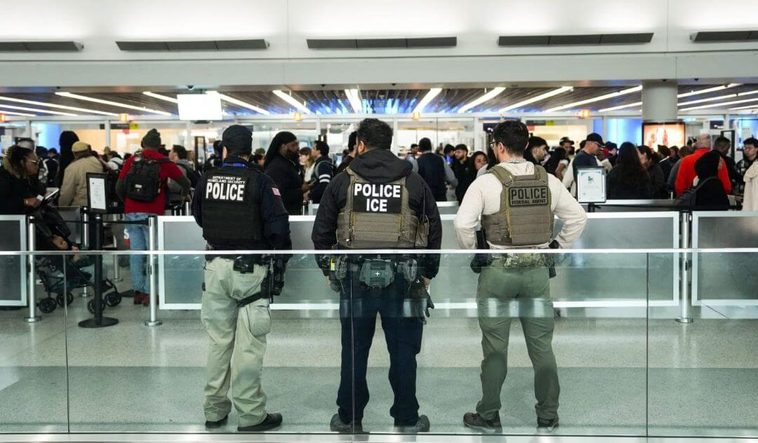
In response to growing logistical strain, federal officials deployed ICE personnel to airports in March to assist with security processing and maintain operational flow. That decision sparked immediate political backlash.
More than 40 House Democrats signed a letter to DHS Secretary Markwayne Mullin urging the removal of ICE agents from airports. The lawmakers argued the presence of immigration officers would “cause confusion and fear.”
However, internal enforcement data now indicates that the collaboration between TSA and ICE had already been active long before that letter was drafted. In effect, the same system being criticized had already produced hundreds of deportation-related arrests.
The enforcement targets themselves were not random travelers or individuals selected arbitrarily. According to DHS-aligned operational summaries, every person arrested under the Secure Flight-linked process had a final order of removal. These were individuals already adjudicated by immigration courts and subject to deportation requirements.
The program’s design, officials say, was intended to ensure that individuals with active removal orders could not move freely through domestic air travel systems while evading enforcement.
DHS Acting Assistant Secretary Lauren Bis stated that ICE would continue its enforcement efforts without interruption, saying ICE “will continue arresting public safety threats from our communities and will not allow the Democrats to slow us down from making America safe again.”
During one enforcement weekend, ICE reported arrests involving individuals tied to violent criminal networks, including an MS-13 gang member, alongside individuals accused of child exploitation, sexual assault, and drug trafficking. The Mara Salvatrucha (MS-13) has long been classified as one of the most violent transnational gangs operating in the United States.
Supporters of the enforcement program argue that the controversy is less about civil liberties and more about interagency coordination finally functioning at scale. Historically, federal immigration enforcement data systems operated in silos, limiting the ability of agencies to act on shared intelligence.
That changed as data-sharing protocols expanded between TSA and ICE, allowing enforcement teams to act on real-time travel information tied to individuals with active deportation orders.
The broader political dispute now centers on whether such coordination represents necessary enforcement efficiency or an overreach of surveillance authority. But the operational results are no longer in question: more than 31,000 records were shared, and more than 800 arrests followed.
The political irony, according to critics of the shutdown strategy, is that efforts to restrict DHS funding came after much of the enforcement system was already fully operational. In that sense, the shutdown did not halt enforcement activity—it instead contributed to airport disruptions that further justified expanded federal presence in travel hubs.
What remains clear is that the Secure Flight system, once built as an anti-terror tool, has evolved into a central node in immigration enforcement operations. And as internal data continues to surface, it is becoming evident that much of the debate in Washington lagged behind the reality already unfolding inside federal agencies.

