
>> Continued From the Previous Page <<
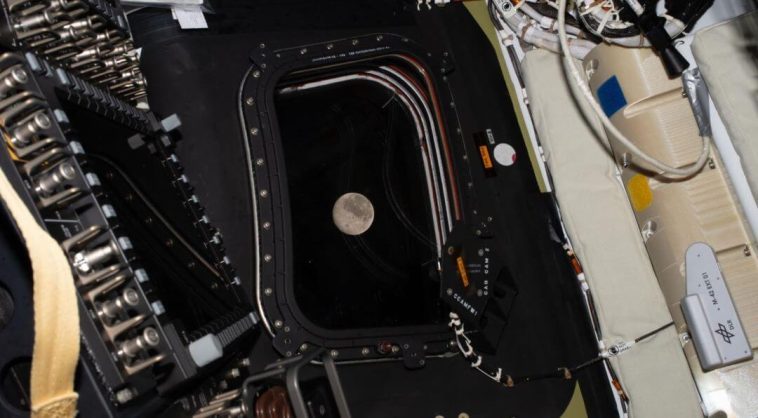
They also reported spotting multiple meteorite impacts lighting up the lunar surface, a reminder of how dynamic and unpredictable space remains.
During the mission, former President Donald Trump called the crew to congratulate them.

“Today you’ve made history and made all of America really proud, incredibly proud,” he told the astronauts.
After a communications blackout as the spacecraft moved behind the moon, the signal finally returned. The emotional weight of the moment was clear.
“It is so great to hear Earth again,” mission specialist Christina Koch said.
Viral Clip Sparks ‘Fake Mission’ Claims
Despite the mission’s success, a strange controversy took off online after a CNN broadcast featuring the astronauts went viral.
During the interview, a small plush toy named “Rise” floated inside the Orion capsule. The toy, used as a zero-gravity indicator, became the unlikely focus of conspiracy theories.
A viewer recorded the broadcast on their phone, and the resulting clip appeared to show letters flickering across the toy’s surface. Social media users quickly jumped to conclusions.
“Green screen glitching,” one user claimed.
“Fake as hell,” another wrote.
“Over 50 million dollars a day to give us green screen BS,” a third added.
Within hours, the clip spread across platforms, with some alleging it was proof the mission had been staged.
The Simple Explanation No One Wanted
The reality, however, is far less dramatic.
What viewers were seeing wasn’t a Hollywood trick or government deception. It was a technical artifact caused by filming a television screen with a smartphone.
Modern broadcasts layer digital graphics, such as captions and logos, over live video feeds. When a phone camera records a TV, mismatched refresh rates can cause those graphics to bleed or distort, especially over bright or moving objects.
The floating toy simply picked up those visual distortions.
Original footage from both NASA and CNN shows no such anomalies. The toy floats cleanly, with no flickering text or visual glitches.
In short, the viral “evidence” wasn’t evidence at all. It was a basic display issue misunderstood and amplified.
A Familiar Pattern of Doubt
This isn’t the first time space achievements have been met with skepticism.
Conspiracy theories about lunar missions date back decades, gaining traction after a 1976 book questioned the legitimacy of the Apollo landings. The debate resurfaced in 2001 when a Fox special reignited public doubt.
Despite overwhelming evidence, including high-resolution images from NASA orbiters showing Apollo landing sites and astronaut tracks, a small percentage of Americans continue to question whether humans ever reached the moon.
The Artemis II backlash shows how quickly misinformation can spread in the digital age, especially when technical misunderstandings are packaged as “proof.”
American Achievement Meets Internet Cynicism
The contrast couldn’t be sharper.
On one hand, a multinational crew successfully executed a complex deep-space mission, pushing the boundaries of human exploration.
On the other, a grainy phone video sparked accusations that it was all fake.
The Artemis II mission stands as a reminder of what’s possible when engineering, courage, and vision come together. But it also highlights a growing challenge: convincing a skeptical public in an era where viral clips can overshadow reality.
History was made above the moon.
And down here on Earth, the debate over truth versus illusion is still very much in orbit.

