
>> Continued From the Previous Page <<
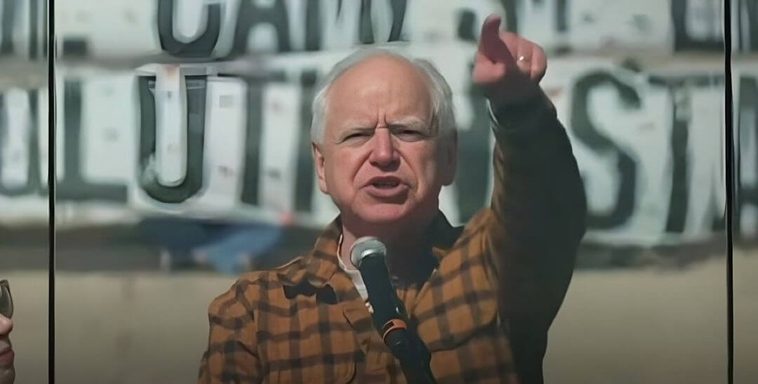
“And I will add a special thank you and a special acknowledgment that we will never leave the side of our Somali Minnesotans. Here’s our pledge to you, our Somali Minnesotans. Your great-grandchildren will still be here when that Orange clown is in the dustbin of history. You will be here,” Walz declared.
The governor’s comments came just one day after former President Donald Trump renewed his criticism of fraud cases tied to Minnesota, specifically pointing to concerns involving networks connected to the Somali community. The timing of Walz’s remarks has raised eyebrows, with critics arguing that his rhetoric glosses over serious and ongoing criminal investigations.

At the center of the controversy is the now-infamous Feeding Our Future case, one of the largest COVID-era fraud scandals in the country. Federal prosecutors have charged more than 78 individuals in connection with an alleged scheme that siphoned off approximately $250 million in taxpayer-funded child nutrition programs. According to investigators, the operation involved billing the government for meals that were never actually served.
Authorities say the majority of those charged in the case are of Somali descent, with many holding U.S. citizenship either by birth or naturalization. Several defendants have already been convicted on charges including wire fraud and money laundering. Prosecutors revealed that stolen funds were often used to finance lavish lifestyles, including luxury real estate purchases and other personal expenditures that had nothing to do with feeding children.
But the Feeding Our Future scandal is just one piece of a much larger puzzle.
Federal investigators have been examining a broader network of state-administered programs, including Medicaid and welfare initiatives, that have collectively billed an estimated $18 billion between 2018 and 2024. Alarmingly, prosecutors believe that as much as half of that total could be tied to fraudulent activity, potentially putting losses north of $9 billion.
These schemes, according to court filings and investigative reports, often relied on fabricated claims for services such as housing assistance and autism therapy. In many cases, the services either never existed or were grossly exaggerated. Officials describe a pattern of shell companies being set up to process fake claims, along with bogus service locations that existed only on paper.
Even more troubling are allegations that some of the funds were funneled overseas. Prosecutors have pointed to evidence suggesting that portions of the money may have been transferred abroad, including to entities with suspected ties to extremist groups.
Critics argue that against this backdrop, Walz’s sweeping defense of the Somali community—without acknowledging the scale of the fraud investigations—risks undermining public confidence and accountability. Supporters, on the other hand, say the governor is attempting to prevent the actions of a few from being used to broadly stigmatize an entire community.
As the investigations continue to unfold, the political and legal stakes remain high. With billions of taxpayer dollars potentially lost and dozens already facing charges, Minnesota finds itself at the center of one of the most significant fraud crackdowns in recent memory—while its governor’s words continue to fuel a heated national debate.

