
>> Continued From the Previous Page <<
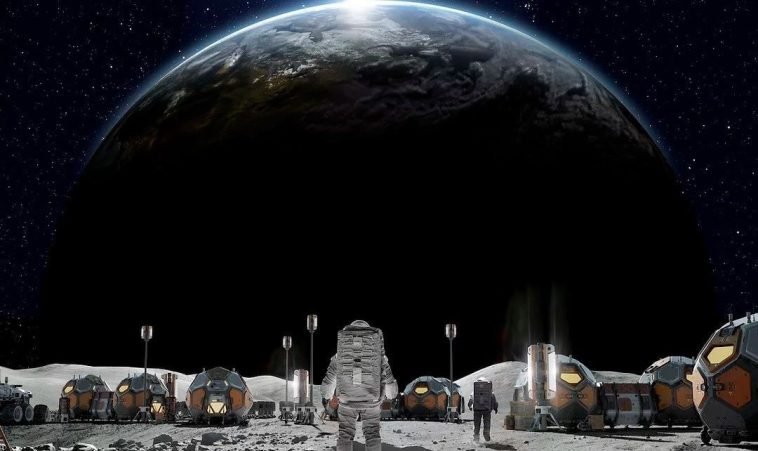
Unlike previous administrations that announced ambitions without execution, this plan comes with funding and structure. NASA is now preparing to spend roughly $20 billion over seven years, executing dozens of missions in a phased campaign that starts with surface operations and ends with sustained human habitation.
This is not a symbolic return. It is a long-term occupation.

Isaacman made it clear that NASA is done with half-measures and orbital detours. The agency is shifting its full weight toward the lunar surface, where real infrastructure, science, and strategic control can be established.
Gateway Axed as NASA Refocuses on the Surface
One of the most controversial moves came swiftly. NASA has effectively sidelined the Lunar Gateway, a planned space station in orbit around the moon that had long been promoted as a staging point for missions.
Critics had argued for years that Gateway was an expensive distraction. Isaacman agreed.
“It should not really surprise anyone that we are pausing Gateway in its current form and focusing on infrastructure that supports sustained operations of the lunar surface,” Isaacman said.
By canceling or pausing the project, NASA is redirecting resources toward boots-on-the-ground capabilities. Hardware, funding, and mission planning are now being funneled into building a permanent foothold directly on the moon.
The message is simple: orbit is optional, the surface is strategic.
China’s Timeline Is Closing Fast
While the United States recalibrated, China pressed forward with a methodical and well-funded lunar program.
Beijing is developing the Long March 10 rocket, designed specifically for crewed lunar missions. Its lunar lander and next-generation spacecraft are already in prototype stages, and its astronaut gear is reportedly mission-ready.
China’s target is clear. A crewed moon landing by 2030.
That timeline is not theoretical. It is backed by hardware, testing milestones, and a proven ability to execute large-scale space projects.
The country has already demonstrated its capabilities by building the Tiangong Space Station, while the aging International Space Station approaches its planned retirement.
When that happens, China could stand alone as the only nation maintaining a continuous human presence in orbit.
And Beijing is not stopping there.
Its partnership with Russia on an International Lunar Research Station signals a broader ambition to create an alternative global space alliance—one that does not revolve around the United States.
A Race Measured in Months, Not Years
Isaacman did not sugarcoat the urgency.
“The clock is running in this great-power competition,” he said, warning that the outcome will be decided far sooner than most Americans realize.
“Success or failure will be measured in months, not years.”
That stark assessment reflects a reality that Washington can no longer ignore. Space is no longer just about exploration. It is about dominance, resources, and setting the rules for the next century.
NASA’s new plan includes annual crewed lunar missions beginning in 2028, marking the first time Americans will set foot on the moon since the Apollo 17 Moon Landing.
It also introduces ambitious parallel efforts, including advanced propulsion systems and preparations for eventual missions to Mars.
The Stakes: Who Controls the Future of Space
The last American astronauts left the moon in 1972 with no roadmap for return. More than five decades later, the stakes are far higher.
This is no longer about planting a flag.
The nation that establishes a permanent presence on the moon will shape the legal, economic, and strategic framework of space for generations. Control of lunar resources, infrastructure, and transit routes could define global power in ways that echo far beyond Earth.
For years, critics argued that NASA’s Artemis program had become bogged down in delays and inefficiency. Gateway, in particular, became a symbol of what many saw as misplaced priorities.
Now, that era is being swept aside.
Isaacman has made it clear that contractors will be held accountable and that underperformance will not be tolerated. The focus is execution, speed, and results.
The United States is no longer preparing for a return.
It is preparing to stay.
And if Isaacman’s words are any indication, America intends to make sure it is the one setting the rules when humanity’s next chapter in space begins.

