
>> Continued From the Previous Page <<
The response was silence. Not a single nation publicly committed to the mission.
Trump did not hold back. In an interview, he issued a stark warning: “If there’s no response or if it’s a negative response, I think it will be very bad for the future of NATO.”

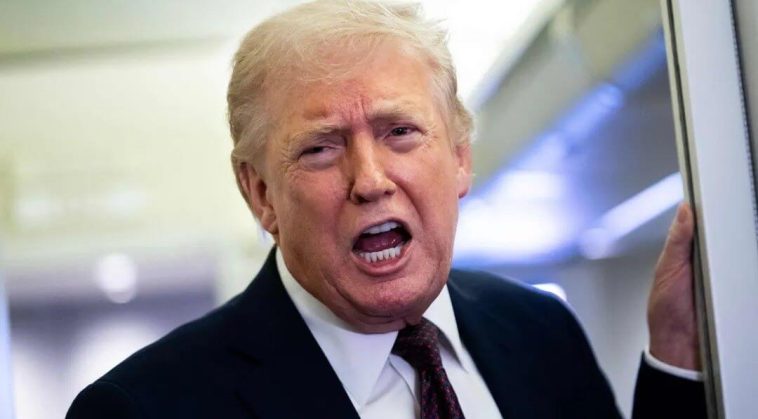
He doubled down aboard Air Force One, making it personal and unmistakable: “Whether we get support or not, I can say this, and I said it to them: we will remember.”
Across Europe, the reaction was immediate and blunt. Germany dismissed the request outright. A government spokesperson stated, “This war has nothing to do with NATO. It is not NATO’s war.”
German Defense Minister Boris Pistorius reinforced that position, saying, “This is not our war, we have not started it.”
The United Kingdom followed a similar path. Prime Minister Keir Starmer emphasized that Britain would “not be drawn into the wider war” and made clear any potential involvement would not fall under NATO command.
Other nations echoed the same reluctance. Greece declined participation. Spain’s Defense Minister Margarita Robles stated her country would “never accept any stopgap measures” tied to keeping the strait open. Even non-NATO allies that heavily rely on Middle Eastern oil refused to step in. Japan confirmed it had no plans to deploy ships, while Australia also declined to contribute.
This is not an isolated moment. It reflects a pattern that has frustrated American leaders for decades.
Since the Cold War, Washington has repeatedly urged NATO members to meet their defense spending commitments. Yet many lagged behind year after year. According to longstanding analyses, allies have fallen short by hundreds of billions of dollars since agreeing to spending targets in 2014.
While European nations only recently crossed the 2 percent GDP defense spending threshold, the United States still shoulders roughly two-thirds of NATO’s total military expenditures.
Trump has long criticized this imbalance. During his presidency, he pressured allies to increase spending and even restructured NATO cost-sharing to reduce the U.S. burden.
Now, the stakes are higher than budget disputes. The Strait of Hormuz is not just a regional issue. It is a global economic artery. At its narrowest point, it spans just 21 nautical miles, making it highly vulnerable to disruption. Modern threats such as drones and naval mines can cripple shipping lanes with minimal resources.
Trump’s request was strategic. European nations possess the exact capabilities needed, including advanced minesweeping vessels and specialized forces trained for maritime security operations.
Yet despite having both the means and the incentive, those same nations have stepped back.
China’s response has been equally cautious. Despite relying on the strait for the vast majority of its oil imports, Beijing has limited itself to vague diplomatic statements, urging restraint without offering concrete support.
The White House echoed Trump’s position. Press Secretary Karoline Leavitt stated, “The president is absolutely right to call on these countries to do more to help the United States reopen the Strait of Hormuz, so that we can stop this terrorist regime from restricting the free flow of energy.”
As the crisis deepens, the consequences are already being felt. Rising fuel costs are hitting American families, global markets are on edge, and the credibility of international alliances is being tested.
Trump’s message is clear. This is not just about one conflict or one shipping lane. It is about whether alliances still mean something when it matters most.
And as he made clear, every country that chooses to stand aside is being noted.
“We will remember.”

