
>> Continued From the Previous Page <<
Critics argued that the punishment reflected a broader ideological push within some school systems that prioritized gender identity policies over transparency with parents.
Supporters of the students rallied behind them, eventually raising approximately $130,000 to challenge the disciplinary action.

The dispute in Loudoun County became a flashpoint in a nationwide battle over parental authority, student privacy policies, and the role of schools in managing gender identity issues.
California Policy Sparks Landmark Legal Fight
The constitutional dispute intensified in California, where statewide guidelines required teachers to use students’ preferred names and pronouns—even when doing so meant withholding that information from parents.
Under those policies, educators were instructed not to disclose a student’s gender transition unless the child approved sharing that information with family members.
In other words, the guidance wasn’t merely advisory—it functioned as a binding rule in many districts.
Two middle school teachers in Escondido, Elizabeth Mirabelli and Lori West, challenged the policy in court in 2023. The educators argued they were being forced to mislead parents about their children’s identities and behavior at school.
Rather than comply, the teachers filed suit, claiming the policy violated constitutional protections and their own rights as educators.
The legal battle eventually reached the nation’s highest court.
Supreme Court Signals Major Constitutional Concerns
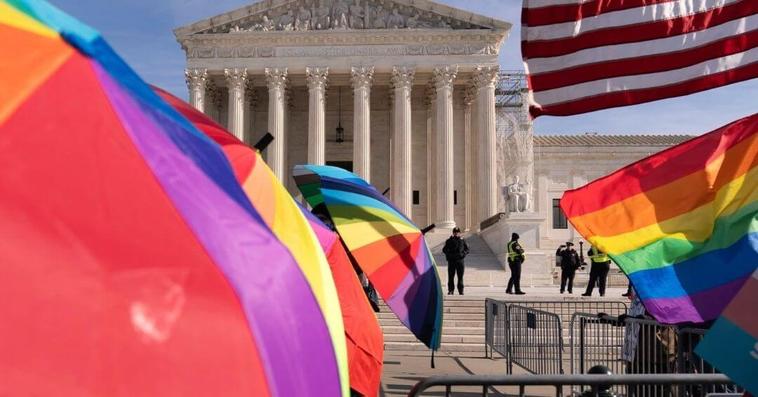
In a 6–3 decision issued on March 2, 2026, the Supreme Court of the United States indicated that California’s secrecy policies likely violated parental rights under both the First Amendment to the United States Constitution and the Fourteenth Amendment to the United States Constitution.
The Court’s unsigned majority opinion delivered a sharp rebuke to the policy, writing that California had “cut out the primary protectors of children’s best interests: their parents.”
Justice Amy Coney Barrett, joined by Chief Justice John Roberts and Justice Brett Kavanaugh, emphasized that parents challenging the policy were “likely to succeed on the merits under a straightforward application” of established precedent.
Justice Sonia Sotomayor stood alone in supporting the continuation of California’s secrecy framework.
The ruling did not merely address one local policy—it signaled a broader constitutional principle about the role of parents in decisions affecting their children.
Court Builds on Earlier Parental Rights Decision
Legal analysts note that the Court’s reasoning builds directly on another recent case involving schools in Montgomery County.
In that dispute, the Court ruled that religious parents must be allowed to opt their children out of classroom storybooks promoting LGBTQ themes.
That earlier decision focused primarily on religious liberty.
The new ruling, however, expands the legal framework by addressing secrecy policies surrounding gender transitions—an issue many parents say goes far beyond classroom instruction.
The Court’s reasoning suggests that facilitating a gender transition while withholding that information from parents could represent a far more serious constitutional problem.
Policies Across the Country Now Under Scrutiny
The implications of the ruling stretch far beyond California.
Across the country, many school districts adopted policies similar to California’s approach. Some require staff to keep a student’s gender identity confidential unless the child approves disclosure.
Loudoun County’s Regulation 8040 is one such policy, stating that a student’s gender identity “should not be shared without the student’s consent.”
The issue has already attracted federal scrutiny. In December 2025, the United States Department of Justice filed a lawsuit against Loudoun County over related concerns.
Separately, the United States Department of Education determined that five Northern Virginia school divisions violated Title IX protections, a finding that reportedly cost the districts more than $50 million in federal funding.
Potential Legal Floodgates Opening
Legal experts say the ruling could unleash a wave of lawsuits.
Parents no longer need to prove they were personally deceived by school officials. According to constitutional arguments highlighted in the decision, simply maintaining a secrecy policy could expose a district to litigation.
That means families may be able to challenge these policies proactively—either individually or through class-action lawsuits.
Recent settlements illustrate the financial risks. Montgomery County agreed to pay $1.5 million after last year’s dispute over LGBTQ-themed materials in schools.
If courts determine that hiding a child’s gender transition from parents violates constitutional protections, the financial consequences for districts nationwide could grow rapidly.
A High-Stakes Turning Point
For years, critics argued that some school boards treated parents as obstacles rather than partners in education.
Supporters of the policies insisted they were necessary to protect vulnerable students.
Now, the Supreme Court has stepped squarely into the debate.
Whether the ruling ultimately dismantles gender secrecy policies across the country will likely be decided in lower courts over the coming months and years.
But one thing is already clear: the legal landscape surrounding parental rights in education has shifted dramatically—and school districts everywhere are taking notice.

