
>> Continued From the Previous Page <<
The case quickly became a flashpoint in the national debate over criminal justice reform and public safety. Republicans pointed to the suspect’s lengthy record as evidence that progressive policies were putting law abiding citizens at risk.
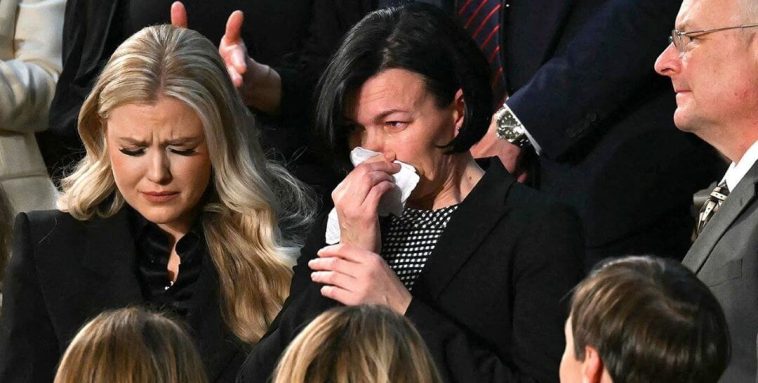
By bringing Anna Zarutska to the State of the Union, Trump forced the issue into prime time.

As the chamber cameras panned across lawmakers, the divide was unmistakable. Republicans rose in unison. Many Democrats remained seated, their expressions stern and unmoved. The White House later highlighted the moment, emphasizing that some members of Congress “refused to applaud the grieving families of women and children killed by violent repeat offenders.”
One Democrat broke ranks. Senator John Fetterman stood and clapped during the tribute. Later, he admitted he was confused by his party’s reaction and said he believed honoring victims should not be partisan.
A Historic Boycott
The drama did not stop there. Roughly half of House Democrats and half of Senate Democrats skipped the address altogether. The American Center for Law and Justice described it as the largest State of the Union boycott in modern history.

House Minority Whip Katherine Clark did not attend, saying she preferred to hear from constituents rather than listen to what she described as falsehoods from the president. Representative Alexandria Ocasio Cortez was absent. Democratic Caucus Vice Chair Ted Lieu also did not attend.
Senator Chris Murphy helped organize an alternative gathering on the National Mall called the “People’s State of the Union.” Protesters there chanted “Abolish ICE” and held signs memorializing individuals who died during immigration enforcement operations.
Inside the chamber, however, the contrast was striking. While some Democrats boycotted, others sat silently as a 100 year old Korean War veteran was awarded the Medal of Honor.
Afterward, Vice President JD Vance observed that many Democratic lawmakers appeared hesitant, glancing at colleagues before deciding whether to stand. He suggested the party’s visible discomfort reflected deeper divisions about how to respond to Trump’s emphasis on law and order.
Political Fallout Ahead
This is not the first time State of the Union theatrics have backfired. In 2020, former Speaker Nancy Pelosi tore up Trump’s speech on camera. In 2025, Representative Al Green was removed from the chamber after shouting and waving a cane, later facing censure.
In 2026, the strategy shifted to what some described as silent resistance or outright absence. Yet the result may have been even more powerful. The image of a grieving mother standing alone while dozens of lawmakers remained seated is already circulating in campaign ads and social media clips.
Even CBS News noted that Democrats appeared unable to applaud positions framed as common sense public safety measures. The visual of one side standing and the other sitting became the dominant takeaway of the night.
For Republicans, the moment encapsulated their central argument: that the government’s first duty is to protect its citizens. For Democrats, it risks reinforcing criticism that the party is out of step with voters concerned about crime and border security.
JD Vance summed up the stakes bluntly, arguing that the evening exposed what he called a radical fringe disconnected from the broader American public.
With November approaching, that single question from the president continues to echo through the Capitol: “How do you not stand? How do you not stand?”
Voters may soon deliver their own answer.

