
>> Continued From the Previous Page <<
A Growing Drone Threat Along the Border
What unfolded over El Paso wasn’t an isolated incident. According to testimony from Department of Homeland Security officials before Congress, cartel operatives conducted nearly 60,000 drone missions along the southern border in just the final six months of 2024. That averages out to more than 300 flights per day.
Air Force General Gregory Guillot told lawmakers the true scope may be even greater, saying the monthly total is “in the thousands” because “I don’t think anybody knows” the exact number.

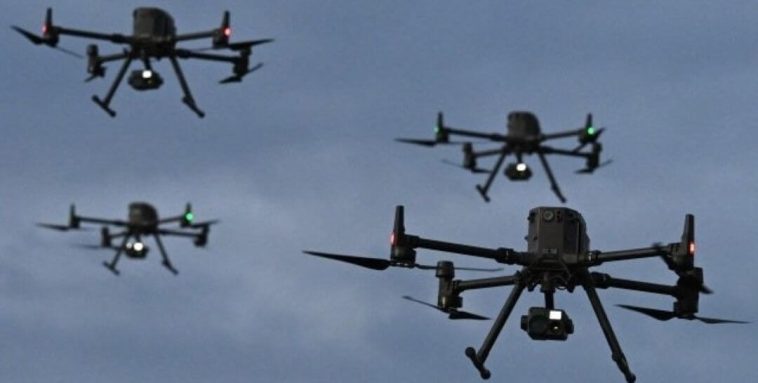
These aren’t recreational gadgets. Law enforcement sources describe sophisticated commercial-grade drones capable of exceeding 100 miles per hour, carrying payloads over 100 pounds, and flying for nearly an hour at a time. Cartels allegedly use them to surveil Border Patrol positions, coordinate smuggling routes, deliver narcotics, and in some cases deploy explosives.
In August 2024, drone-delivered explosives killed two Mexican soldiers in Michoacán. By 2025, at least 17 people had reportedly died in cartel drone attacks tied to escalating turf wars south of the border.
DHS official Steven Willoughby warned Congress in July 2025 that “it’s only a matter of time” before cartels attempt a strike against U.S. personnel or civilians using weaponized drones.
A Military Shift in Strategy
The recent El Paso breach highlights a significant change in posture. Fort Bliss, adjacent to Biggs Army Airfield, has become a focal point for counter-drone testing and deployment. According to media reports, the military was actively testing laser-based countermeasures when the incursion occurred.
Rather than merely monitor the drones, defense units disabled them. The response was swift enough that commercial air traffic resumed within hours.
Supporters of the current administration argue this represents a clear difference in philosophy—treating cartel operations as paramilitary threats rather than isolated criminal acts.
Representative Veronica Escobar, whose district includes El Paso, raised concerns about communication protocols, stating she would have preferred advance notice. Her comments sparked debate over whether operational secrecy or political coordination should take priority during national security incidents.
Cartels Adopting Battlefield Tactics
Security analysts warn that Mexican criminal organizations are no longer relying on off-the-shelf drones alone. Groups like the Jalisco New Generation Cartel and the Sinaloa Cartel have reportedly developed dedicated drone units and adopted tactics seen in overseas conflicts.
In April 2025, CJNG allegedly used a DJI Avata 2 drone equipped with explosives in a kamikaze-style attack—mirroring methods employed in the war in Ukraine.
Some analysts also point to China’s dominance in the civilian drone market, warning that commercial technology can quickly transition into weaponized applications under Beijing’s civil-military fusion policies.
A New Era of Border Defense
The Department of Defense has requested over $3 billion in fiscal year 2026 for expanded counter-drone capabilities. A newly formed Joint Interagency Task Force 401 has been tasked with coordinating detection and interception strategies, while advanced kinetic systems capable of striking drones mid-air are being deployed.
Defense Secretary Pete Hegseth issued a directive in June urging forces to “re-establish drone dominance,” signaling an aggressive push to confront airborne threats near U.S. borders.
The El Paso airspace incident underscores a broader shift in national security priorities. Drone warfare between rival cartel factions intensified after internal splits within the Sinaloa Cartel in late 2024, and U.S. officials now warn that such tactics could spill northward.
For supporters of the administration, the message is clear: sovereignty is enforced not through speeches, but through action. The military response over El Paso, they argue, demonstrates a willingness to meet evolving threats with force rather than hesitation.
Whether this marks a long-term turning point in border security remains to be seen. But one thing is certain—the battle over America’s southern skies has entered a new and more dangerous phase

