
>> Continued From the Previous Page <<
According to Armstrong, conflict is not being pursued for security or strategy but as a political distraction.
“It’s a distraction,” Armstrong stated. “Without war, people are going to figure out what the hell is going on. My pension fund is gone. Everything is defaulting. What’s going to happen? They are basically going to be storming the parliament with pitch forks.”

For years, European officials insisted their debt problems were manageable. Armstrong says that illusion is now collapsing.
France and Germany, Europe’s two largest economies, have already floated the possibility of turning to the International Monetary Fund for emergency assistance. That alone would have been unthinkable just a decade ago.
The warning signs are everywhere. European banks remain heavily invested in government bonds that are supposed to be low risk. If those governments begin defaulting, the fallout would not stop at pensions. It would detonate entire banking systems.
“This is where the volatility starts kicking in,” Armstrong said.
And that volatility, he argues, is only beginning.
Armstrong points to history as a guide. Twice in the 20th century, Europe destroyed itself through war, financial collapse, and political chaos. Twice, the United States emerged stronger as capital fled overseas turmoil.
“The US became the financial capital of the world because Europe blew its brains out twice,” Armstrong noted. “Now, they think the third time is going to be the charm.”
His proprietary Economic Confidence Model, which correctly flagged the 1987 stock market crash, Japan’s 1989 bubble peak, and the 2007 housing collapse, now shows instability accelerating into early 2026.
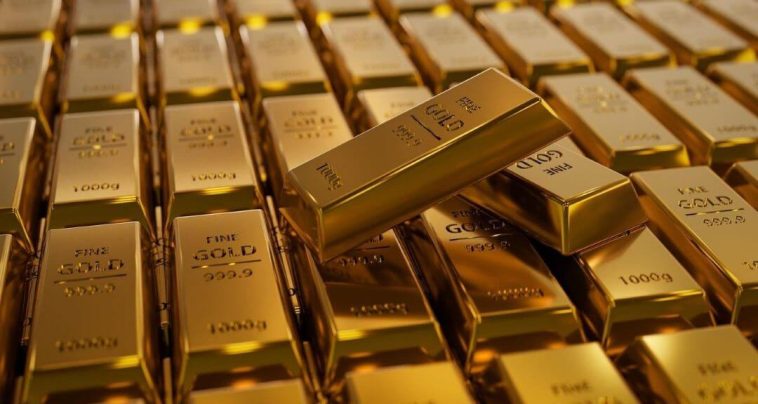
Armstrong believes precious metals will initially consolidate before exploding higher once investors grasp the scale of what lies ahead.
“I am looking at the $165 to $200 per ounce area for silver,” Armstrong projected. “For gold, I am looking at resistance at the $8,500 per ounce level and, after that, $10,000 per ounce . . . in the next few years.”
Major Wall Street firms are already inching closer to that outlook, albeit more cautiously.
JPMorgan Chase forecasts gold reaching $5,000 per ounce by late 2026, with higher levels possible beyond that. Goldman Sachs has warned prices could surge if the Federal Reserve’s independence comes under pressure. Bank of America recently raised its 2026 average gold forecast to $4,400, with upside risk to $5,000.
Armstrong says those numbers may still underestimate what a European conflict would trigger.
“If there is war in Europe, it will be maybe in the summer,” Armstrong predicted. “It does not look good.”
Central banks appear to agree. For three straight years, they have been buying more than 1,000 tonnes of gold annually, quietly preparing for a world where sovereign debt no longer carries credibility.
Armstrong warns investors will find fewer and fewer safe havens.
“You can’t park money in Canada, Mexico, Japan, or Europe,” he said. “Where are you going to put serious money? The United States is the only place—sorry. This is why the United States is what it is.”
The dollar, he believes, will remain strong. But gold will rise alongside it as confidence in paper currencies erodes.
When Armstrong warns that Europe is approaching a breaking point and gold could reach five figures, history suggests it is worth paying attention.
The real question is whether ordinary Americans will move in time to protect their savings, or once again be left reacting after the damage is already done.

