
>> Continued From the Previous Page <<
Data reviewed by federal officials indicates that approximately 18 percent of all home healthcare billing in the entire United States originates from Los Angeles County alone. That means nearly one-fifth of the nation’s home health claims are being submitted from a single county, raising major red flags for investigators tasked with protecting taxpayer dollars.
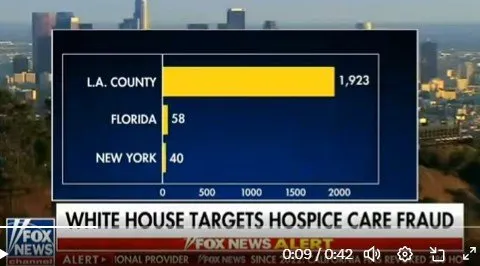
The numbers grow even more disturbing when it comes to hospice care.

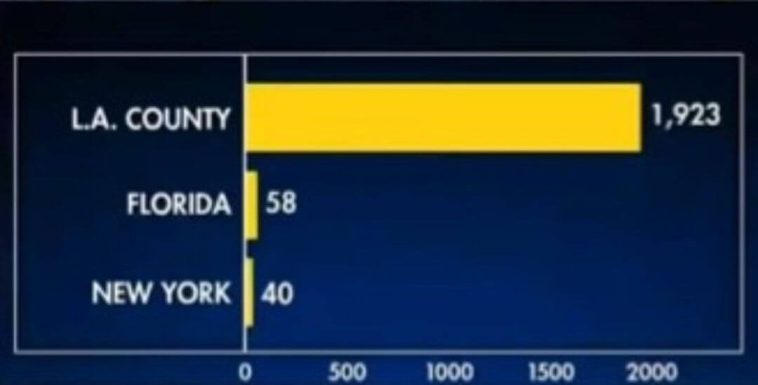
Los Angeles County reportedly has nearly 2,000 registered hospice agencies, a figure that dwarfs much of the rest of the country. In fact, the county has more hospice providers than 36 states combined, and roughly thirty times more than the entire states of Florida and New York.
For many critics, that statistic alone suggests something is deeply wrong.
Dr. Oz has openly questioned how such an explosion of hospice agencies could occur without meaningful oversight, especially in a state already known for loose regulatory enforcement and political resistance to federal accountability measures.

During a recent discussion, Dr. Oz explained just how shockingly easy it is to establish a hospice operation in Los Angeles—often without even being physically present in the state.
Dr. Oz:
“How is that possible? And take a look at this map, a cluster of 287 hospice providers, in a two-mile radius, some in strip malls, unmarked buildings, even a wrecking yard and vacant lot. All of it is just paperwork. I could fill that out in Kazakhstan if I want and get a hospice license waiting for me.”
The imagery painted by Dr. Oz is difficult to ignore. Hospice providers operating out of strip malls, abandoned lots, and unmarked buildings raise serious questions about patient care, legitimacy, and whether services are actually being delivered at all.
Conservatives argue this situation is the predictable result of years of lax enforcement, ideological resistance to oversight, and a political culture in California that prioritizes bureaucracy over accountability.
Trump administration officials have made clear that cracking down on Medicare and Medicaid fraud is not optional—it is a necessity. With entitlement programs already under strain and the national debt continuing to climb, allowing fraudulent operations to siphon billions from taxpayers is no longer tolerable.
Sources close to the administration say Los Angeles County could become a test case for broader national reforms, including tighter licensing requirements, enhanced audits, and aggressive prosecution of fraudulent providers.
For many Americans, especially seniors who depend on Medicare, the concern goes beyond wasted money. Fraud on this scale threatens the integrity of the healthcare system itself, potentially diverting resources away from patients who genuinely need care.
As federal investigators dig deeper into California’s healthcare maze, one thing is becoming increasingly clear: what’s happening in Los Angeles is not just a local issue—it’s a national scandal hiding in plain sight.
And under the Trump administration, it may finally be exposed.

