
>> Continued From the Previous Page <<
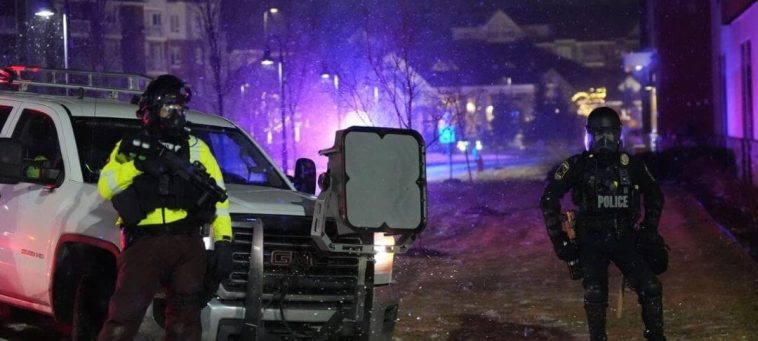
Law enforcement later declared the gathering unlawful after protesters damaged property, blocked nearby roads, and threw debris toward officers. The confrontation ended with twenty six arrests on charges including unlawful assembly and riotous conduct.
The unrest followed the January twenty four fatal shooting of Alex Pretti, a thirty seven year old ICU nurse killed during a confrontation involving federal agents in Minneapolis. That incident ignited nightly protests connected to Operation Metro Surge, a Trump administration initiative focused on removing criminal illegal aliens from Minnesota.

According to law enforcement sources, demonstrators targeted the Maple Grove hotel believing Border Patrol Commander Gregory Bovino and several federal agents were staying inside. Officials have not publicly confirmed whether Bovino or other agents were present.
In a public statement, Maple Grove Police emphasized the department’s stance on public demonstrations, stating it “respects First Amendment rights” but “will not tolerate property damage or violence.”
Officers also stressed that repeated warnings were issued before the LRAD system was activated.
The device itself has drawn renewed scrutiny from activists and medical professionals. The LRAD is capable of projecting highly focused sound waves over long distances. While commonly used to broadcast commands, it can also emit a piercing deterrent tone designed to overwhelm the senses.
Marine Col. Mark Cancian, a defense analyst at the Center for Strategic and International Studies, described its impact bluntly.
“We used it in Iraq. If you’re in the cone, it sounds like the voice of God is speaking to you.”
Experts warn that when used improperly or at close range, the device can cause lasting hearing damage, ruptured eardrums, vertigo, nausea, and panic. Even in voice mode, the system is capable of exceeding one hundred forty decibels at full power.
Cancian noted that when operated correctly, the technology can reduce the need for more aggressive crowd control tactics. “It can avoid lethal outcomes while asserting control,” he said.
Video footage from Monday night showed troopers surrounding the hotel as amplified commands echoed through the area. Several protesters later claimed they experienced ringing in their ears and dizziness, though no hospitalizations were reported.
The timing of the LRAD deployment has intensified public interest in so called sonic weapons following recent remarks by President Donald Trump.
While discussing the capture of Venezuelan dictator Nicolás Maduro, Trump referenced advanced military technology, saying the United States deployed “amazing weapons nobody else knows about,” adding, “It’s probably good not to talk about it.”
Reports from Venezuela alleged that American special forces used a directed energy device to incapacitate Maduro’s security team. One guard described a “very intense sound wave” that caused bleeding and disorientation.
Although those claims remain unverified, White House Press Secretary Karoline Leavitt amplified the discussion by reposting the account and calling it “a modern marvel of American defense.”
Analysts caution that the LRAD used in Minnesota is not the same technology reportedly deployed overseas. The system used by state patrol is commercially available and classified as non lethal crowd management equipment.
Still, the overlap in timing has fueled speculation that Minnesota’s deployment represented a test of advanced acoustic systems on American soil.
State officials strongly denied that claim.
“This technology was used strictly for communication and public safety,” a State Patrol spokesperson said. “Our goal was to prevent physical confrontation.”
As protests continue to spread and law enforcement leans on increasingly powerful tools, Minnesota’s use of the LRAD is likely to remain at the center of a growing national debate over public order, protest limits, and the expanding reach of federal immigration enforcement.

