
>> Continued From the Previous Page <<
At the center of the dispute is the unfinished DHS appropriations bill for the fiscal year that began on October 1, 2025. While Congress has already approved multiple spending packages, DHS funding remains unresolved. Lawmakers face a January 30, 2026 deadline to either pass a full funding agreement or adopt a continuing resolution to keep the government operating.
Without an agreement, non-essential DHS functions could be disrupted. Although core ICE enforcement would continue under existing funding from the 2025 budget, a shutdown could affect pay for certain federal employees and disrupt other government services unrelated to immigration enforcement.

Democrats insist they will not support any DHS funding package that increases ICE resources without what they call “oversight measures.” Those proposals include requiring agents to obtain warrants for arrests, mandating visible identification during operations, and sharply limiting the use of firearms in civil enforcement actions.
Critics argue that such measures would cripple ICE’s ability to operate effectively while placing agents at heightened risk. Federal officials have documented dozens of violent attacks against immigration officers over the past year, many linked to far-left activist networks that openly track and harass agents.
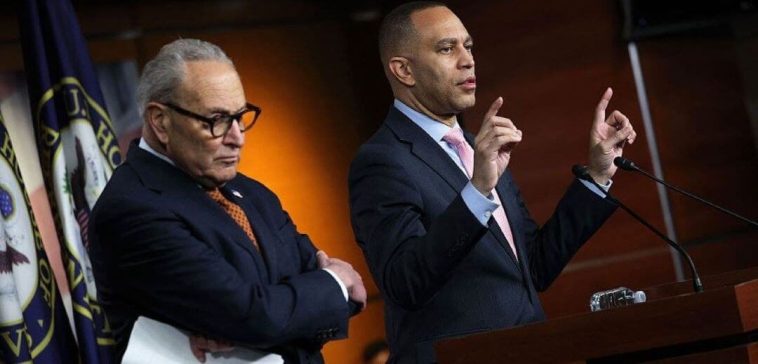
House Minority Leader Hakeem Jeffries framed the issue in stark terms earlier this week.
“Taxpayer dollars are being used by the Department of Homeland Security and ICE to unleash extremism on the streets of America by individuals who are showing depraved indifference to human life,” Jeffries said.
He followed the statement by outlining demands aimed at reshaping ICE from the ground up.
“There are a variety of different things that can be done that we have put on the table and will continue to put on the table to get ICE under control so that they are actually conducting themselves like every other law enforcement agency in the country, as opposed to operating as if they’re above the law, somehow thinking they’ve got absolute immunity.”
While Democrats have stopped short of explicitly declaring that a shutdown is inevitable, their refusal to back DHS funding without major changes has produced a standoff that is rapidly hardening.
Senate Minority Leader Chuck Schumer has reportedly drawn a firm red line against increasing ICE funding, raising the likelihood that any short-term continuing resolution would simply freeze spending levels without implementing Democratic demands. Senator Angus King, who caucuses with Democrats, acknowledged the looming conflict, saying, “It’s going to be quite a fight.”
For a shutdown to occur, Democrats would need to block a continuing resolution in the Senate. Although Republicans hold the majority, procedural rules mean they would still need 60 votes to overcome a filibuster. That reality has fueled renewed calls from some Republicans to eliminate the filibuster for government funding bills altogether.
Donald Trump has long argued that the filibuster should be abolished entirely, particularly when it is used to block funding for national security and law enforcement. Senate Majority Leader John Thune, however, has resisted that move, warning that changing the rules could have long-term consequences for the chamber.
As negotiations stall, Democrats appear increasingly willing to use the threat of a shutdown to extract concessions on ICE, even as Republicans warn that such a move would jeopardize public safety and disrupt government services nationwide. With the January deadline fast approaching, the showdown over immigration enforcement may soon test how far each side is willing to go.

