
>> Continued From the Previous Page <<
During a hearing on Wednesday, Judge Menendez acknowledged the urgency of the concerns but emphasized that the court needed adequate time to review the arguments on both sides. She noted that there is limited legal precedent clearly defining the boundaries of federal immigration authority in circumstances like those presented.
Menendez established an expedited briefing schedule, ordering the U.S. Department of Justice to submit its formal response by January 19. State officials were given until January 22 to file additional legal arguments. A ruling on whether to impose restrictions or halt the operations altogether is expected later this month.

“That should not be taken as a prejudgment of the merits of either the plaintiff’s case or the anticipated defense that may be raised by the United States,” Menendez said. “It is simply observing that these are grave and important matters and that they are somewhat frontier issues in constitutional law.”
Minnesota Attorney General Keith Ellison and other state officials argue that the federal crackdown has damaged public trust and placed residents at risk. They claim that aggressive enforcement tactics undermine cooperation between local communities and law enforcement, particularly in immigrant-heavy areas.
Federal attorneys pushed back, stressing that the administration had been given very little time to respond to the lawsuit. They also maintained that ICE operations are fully authorized under federal law and necessary to enforce immigration statutes passed by Congress.

Legal analysts note that federal courts have historically been reluctant to limit federal agencies from carrying out their constitutional and statutory responsibilities. There is scant precedent for states successfully blocking federal immigration enforcement actions within their borders.
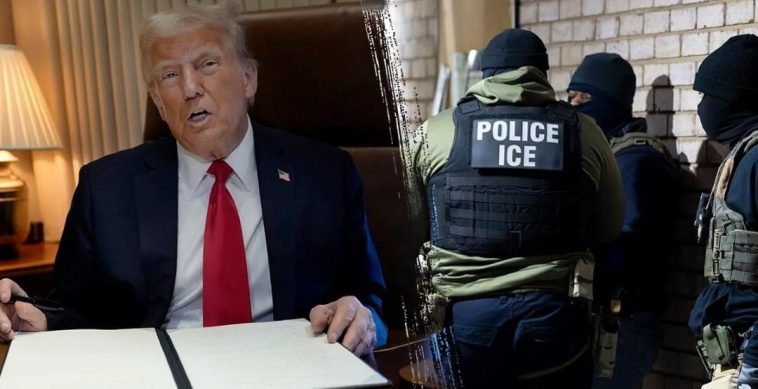
The legal battle comes amid heightened tensions in Minneapolis following the January 7 shooting death of Renee Good during an ICE operation. The incident ignited protests and intensified scrutiny of federal enforcement tactics. Since the current operation began in December, federal agencies have reportedly made thousands of arrests across Minnesota.
As the court deliberates, ICE activity is expected to continue. Reports suggest enforcement efforts may also be expanding into sensitive locations, including the Hennepin County Medical Center—the state’s largest public safety net hospital—and Minneapolis–St. Paul International Airport.
According to MPR News, ICE agents have entered hospitals with detainees, at times without warrants. Five nurses affiliated with Hennepin Healthcare, who requested anonymity, told reporters that federal agents were present during patient appointments, raising alarms among medical staff.
At the airport, an anonymous employee shared an internal memo with FOX 9 outlining plans for ICE agents to operate at the facility for three weeks. The memo reportedly details document checks for both travelers and airport employees, signaling a broader enforcement footprint.
Meanwhile, new information has emerged regarding the ICE agent involved in the fatal shooting of Renee Good. Federal officials revealed that the agent suffered internal bleeding to the torso during the encounter, supporting claims that the shooting was an act of self-defense.
Sources familiar with the incident stated that the injury occurred when Good’s vehicle struck the officer, identified as Jonathan Ross, a 10-year law enforcement veteran. The Department of Homeland Security confirmed the injury but declined to provide further medical details, citing privacy concerns.
Homeland Security Secretary Kristi Noem previously addressed the incident, confirming that Ross was treated at a local hospital and released the same day. “The officer was hit by the vehicle. She hit him. He went to the hospital. A doctor did treat him. He has been released,” Noem said. She added that Ross “acted to protect himself and his fellow agents.”
As protests continue and legal arguments intensify, the case underscores the widening divide between Democratic-led states and the federal government over immigration enforcement. For now, ICE operations in Minnesota will move forward while the court weighs whether federal authority—or state resistance—ultimately prevails.


We hope that U.S. District Judge Katherine Menendez will stay smart and andcontinue to support ICE and other law enforcement. By supporting ICE, she is supporting the citizens and making citizens safe! Any judge that goes against the safety of the citizens and decides to prevent ICE from doing the job that they need to be doing, should not be a judge and if coming up for reelection they should be voted out. Judges should be putting the Citizens First and any that do not support ICE do not deserve to be a judge. If they can’t be voted out, they need to resign if they’re against the Citizens who are supporting ICE for safety.