
>> Continued From the Previous Page <<
Hilton also reaffirmed its official position regarding access to its properties.
“Hilton’s position is clear: Our properties are open to everyone and we do not tolerate any form of discrimination,” the statement added, per Business Insider.

Despite the clarification, the incident rattled investors. Hilton’s stock dropped by nearly 2.5 percent on Monday following the public disclosure of the hotel’s actions and the political firestorm that followed.
The owner of the Lakeville property, Everpeak Hospitality, issued its own statement a day later, attempting to contain the damage and walk back the decision.
The company said the situation was “inconsistent with our policy of being a welcoming place for all.”

“We are in touch with the impacted guests to ensure they are accommodated,” the statement went on to say, per BI. “We do not discriminate against any individuals or agencies and apologize to those impacted.”
The episode highlights a broader issue within the hospitality industry. Like most major hotel chains, Hilton does not own the vast majority of the properties that operate under its brand. Instead, it licenses its name to independently run hotels, leaving corporate headquarters to manage reputational fallout when franchise owners make controversial decisions.
According to Hilton’s 2025 proxy statement, the company’s largest known shareholders include Vanguard, which holds roughly 10.6 percent of common stock, and BlackRock, which owns approximately 8.5 percent.
The timing of the controversy is significant, coming as President Donald Trump ramps up immigration enforcement during his second term in office.
Since returning to the White House, Trump has ordered the Department of Homeland Security to dramatically expand arrests and removals of illegal immigrants, particularly those with criminal records. Administration officials have repeatedly emphasized that enforcement efforts prioritize individuals convicted of violent crimes, those facing pending charges, and migrants who illegally reentered the country after prior deportations.
Homeland Security Secretary Kristi Noem has stated that hundreds of thousands of “criminal noncitizens” have been arrested during the first nine months of the administration.
Trump has also taken steps to dismantle Biden-era immigration programs, including the rollback of Temporary Protected Status for several countries. His administration has moved to end TPS designations for South Sudan, Haiti, Venezuela, and Afghanistan, arguing that conditions no longer justify blanket protections. Many of those decisions are now tied up in federal court.
At the southern border, the administration has reinstated tougher enforcement policies, expanded expedited removals, and eliminated parole programs created under President Joe Biden, including the CBP One app process. Trump officials have argued those programs incentivized illegal crossings and overwhelmed federal agencies.
The White House has also authorized broader cooperation between federal immigration authorities and local law enforcement, while deploying National Guard units and additional federal personnel to assist with enforcement in major metropolitan areas.
Democrats and immigration activist groups have predictably attacked the policies, claiming they threaten civil liberties. The administration, however, maintains the crackdown is essential to restore border security, reduce fraud, protect public safety, and reestablish the rule of law.
Trump has repeatedly framed immigration enforcement as a central pillar of his law-and-order agenda heading into the 2026 midterm elections.
Just last month, DHS finalized sweeping new rules expanding biometric screening at U.S. borders. Under a regulation titled “Collection of Biometric Data from Aliens Upon Entry to and Departure from the United States,” Customs and Border Protection is now authorized to collect facial biometric data from all non-U.S. citizens entering or exiting the country.
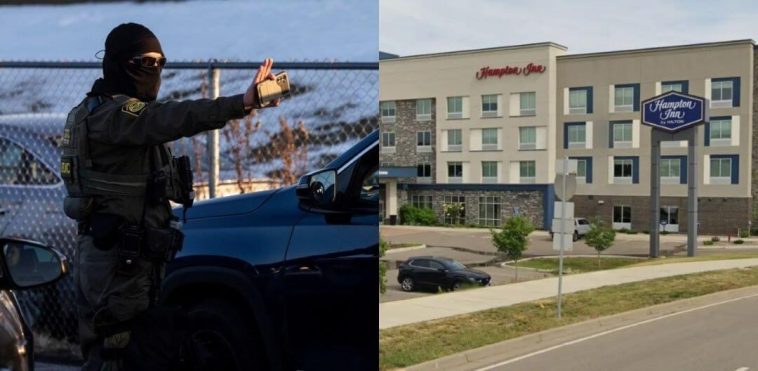
Against that backdrop, the decision by a Hilton-branded hotel to bar federal immigration agents struck a nerve with conservatives nationwide. While the company moved quickly to shut it down, the incident underscores the growing cultural and political tensions surrounding immigration enforcement in America.
Whether corporations like Hilton can continue to control franchise behavior amid an increasingly polarized political climate remains an open question.

