
>> Continued From the Previous Page <<
The second bill, authored by Arizona Republican Andy Biggs, goes even further. It expands federal law to allow prosecution of individuals who pressure minors into acts of self harm, violence, or abuse, including convincing children to harm themselves or others while being monitored online.
Lee defended her legislation by stating, “Congress has a responsibility to ensure that our laws keep pace with evolving forms of exploitation and that our law enforcement has the tools it needs to protect victims and hold predators accountable.”

The urgency behind the bills is hard to ignore. Between 2021 and 2023, reports of online enticement surged more than 300 percent according to the National Center for Missing and Exploited Children. Federal investigators uncovered more than 13,000 blackmail cases and linked at least 20 child suicides to these online schemes.
One of the most horrifying examples cited during the hearings involved a shadowy extremist network known as the 764 Network. The group operates across mainstream platforms like Roblox, Discord, Twitch, Snapchat, and other apps used daily by children.
According to investigators, members of 764 groom vulnerable minors and pressure them into cutting themselves, harming pets, producing explicit content involving siblings, and even attempting suicide while streaming the acts live for other members to watch.
Biggs explained the legal gaps his bill aims to close, stating, “The conduct of [these] groups does not always fit neatly into existing criminal statutes, potentially jeopardizing prosecutions.” He added, “My legislation criminalizes compelling or enticing a minor to engage in self-harm, resulting in death, engaging in animal crushing or acts of self-mutilation or self-branding.”
The National Center for Missing and Exploited Children has described cases tied to the 764 Network as “some of the most sadistic online enticement reports” they have ever reviewed.
Raskin himself cited a particularly disturbing case during committee hearings, recalling how federal agents struggled to pursue charges even after a child was manipulated into suicide during a live stream.
“The FBI agents who worked on this case repeatedly encountered roadblocks while attempting to get prosecutors to even simply to file charges on the case, with one U.S. attorney telling him it simply wasn’t possible,” Raskin revealed.
Federal authorities now classify the 764 Network as a form of modern day domestic terrorism. Attorney General Pam Bondi called it “one of the most heinous online child exploitation enterprises we have ever encountered.” FBI Director Kash Patel confirmed that more than 350 individuals nationwide are currently under investigation for ties to similar networks.
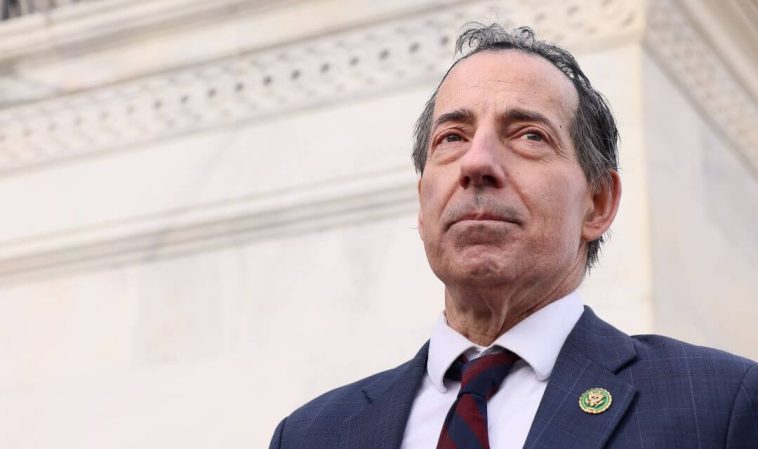
During debate on the bills, Raskin openly broke from Democratic orthodoxy.
“I plan to support this bill,” he said. “It raises very serious issues. It has a very important objective.”
While Raskin noted that the legislation could go further, including addressing financially motivated sextortion schemes, he made clear that delay was no longer acceptable.
That shift reflects a broader reality Democrats can no longer ignore. Reports of sadistic online exploitation jumped more than 200 percent in 2024 alone. As of May 2025, financially motivated sextortion schemes have been linked to 40 child suicides in the United States.
Public opinion is also moving rapidly. Fox News polling shows that 64 percent of American parents support removing cellphones from K through 12 classrooms and banning social media for children under 16. Among Republicans, support rises to 73 percent.
Internationally, Australia has already enacted a sweeping ban on social media use for children under 16, covering platforms like YouTube, TikTok, X, Instagram, Snapchat, Reddit, Twitch, and more. Companies that fail to enforce the restrictions face fines reaching $50 million.
The Republican led bills now head to the full House once lawmakers return from the holidays. While the timeline for a floor vote remains uncertain, bipartisan backing gives the measures a real chance of becoming law.
When even Jamie Raskin acknowledges that Republicans are right about the growing danger facing children online, the familiar Democratic talking points about extremism start to fall apart.

