
>> Continued From the Previous Page <<
The chain’s stock has fallen 38% this year, while CEO Scott Boatwright has cut sales projections for three straight quarters.¹ Chipotle has watched traffic collapse, revenue slide, and Wall Street analysts warn that the worst may not be over.
Same-store sales fell 4% in Q2 and barely eked out 0.3% growth in Q3—but that tiny uptick was only because the chain raised prices while customers fled.² Once known for oversized burritos loaded with double meat, Chipotle is now turning to tiny protein portions to keep customers engaged.

Weight Loss Drugs Are Reshaping the Food Industry
The explosion of obesity medications like Ozempic, Wegovy, Mounjaro, and Zepbound is not just a health story—it’s a business crisis for restaurants. These drugs reduce appetite dramatically, leaving users needing smaller, protein-rich meals.
“About 70% of Americans now prioritize protein intake and more than one-third increased consumption over the past year,” reports the International Food Information Council.³ But the real force behind the change is chemical: GLP-1 receptor agonists are altering hunger signals and redefining what Americans can physically eat.
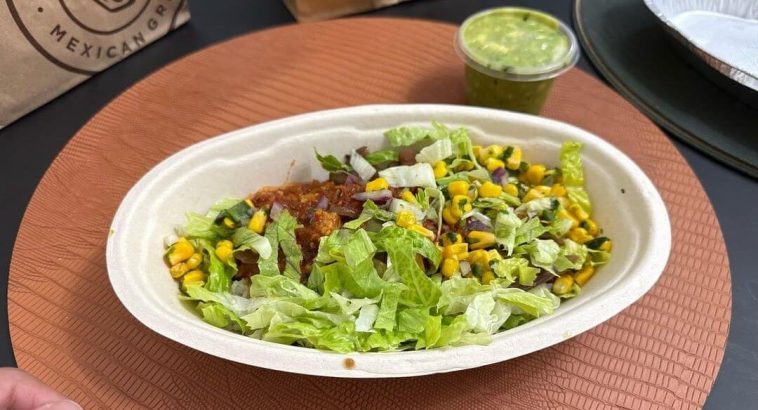
Chipotle’s new “High Protein Menu” spans 15 to 81 grams of protein, but the tiny meat cup is the clearest signal that the chain is scrambling to adapt. Labeled a “snack” and inspired by TikTok “protein hacks,” the cup represents a retreat from traditional burrito sales.
Other chains are adjusting too. Starbucks rolled out protein lattes and cold foam drinks,⁴ while Smoothie King launched GLP-1-friendly smoothies with up to 61 grams of protein.⁵ Even sit-down restaurants like Cuba Libre are creating smaller, protein-heavy options for Ozempic users.⁶
The Hidden Crisis Chipotle Won’t Admit
Chipotle’s traditional profit model relied on upselling extras—double meat, guacamole, cheese, and more. Every add-on boosted profits because customers felt justified paying for their piled-high burritos.
But GLP-1 users aren’t interested in extras. They want plain chicken or steak they can consume without discomfort. Chipotle’s core demographic, ages 25 to 35, overlaps heavily with those most likely to be on weight loss drugs.⁷ This is the group that abandoned the chain this year, especially under economic pressures.
About 40% of Chipotle’s customers—those earning under $100,000—have cut back on visits.⁸ These aren’t people switching to cheaper meals; they simply can’t eat the portions they once did.
Boatwright calls it “persistent macroeconomic pressures” and “consumer sentiment” declining. In plain English: “Our customers are on drugs that make them not hungry, and we don’t know how to fix it.” The meat cup is a desperate attempt to recapture sales from a shrinking appetite.
A Trend That Won’t Go Away
Analysts estimate 1.4 million Canadians are on GLP-1 medications, a number expected to triple by 2030.⁹ The U.S. market is much larger. Restaurants that thrived on oversized meals are now struggling to adapt.
For decades, chains like Chipotle built empires on American gluttony. Weight loss drugs haven’t just slowed the market—they’ve fundamentally changed it. The golden era of supersized profits may be over, and Chipotle is scrambling to survive in a world where Americans literally can’t finish their food.

