
>> Continued From the Previous Page <<
The violent episode dates back to September 1983. On the morning of September 24, residents of rural Rusk County awoke to a nightmare. The bodies of five young victims were found on a remote oil lease, executed and left behind in an area far removed from help or witnesses.
Those victims were Opie Hughes, 39; Mary Tyler, 37; Joey Johnson, 20; David Maxwell, 20; and Monty Landers, 19. According to reporting from the Dallas Morning News, all but Landers were employees at a KFC restaurant in Kilgore, Texas.

Investigators determined that each victim had been shot in the back of the head in what law enforcement described as execution-style killings—an unmistakable sign of calculated violence rather than a crime of panic. Hughes’ case was even more disturbing, with authorities later confirming she had also been sexually assaulted, a detail reported by DPS and KDFW-TV.
Evidence eventually revealed that the victims were abducted the night before their bodies were discovered. The kidnappings took place during an armed robbery at the Kilgore KFC, turning what should have been an ordinary closing shift into a deadly ordeal that ended miles away from the restaurant.
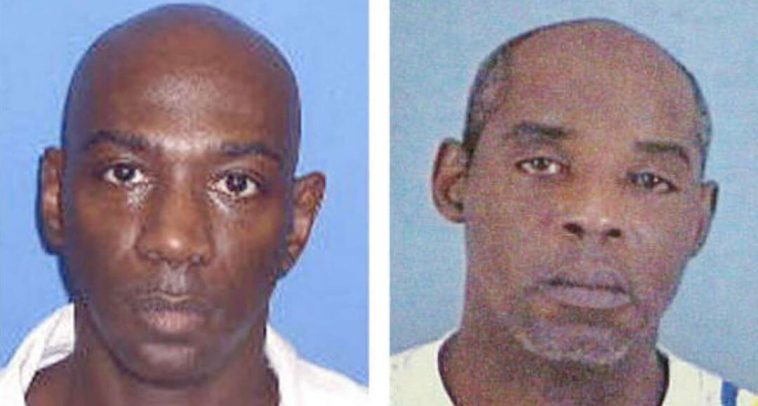
For years, the investigation stalled, with few leads and little progress. It wasn’t until decades later that advancements in forensic science reopened doors that had long been closed. In 2007 and 2008, two men—Romeo Pinkerton and Darnell Hartsfield—were convicted for their roles in the murders after DNA evidence collected at the restaurant tied them to the crime.
Yet even with those convictions secured, investigators knew the story wasn’t complete. A crucial piece of DNA recovered from Hughes’ clothing did not match either Pinkerton or Hartsfield. That lingering evidence pointed to a third participant—someone who had managed to evade justice for decades.
Determined not to let that final suspect remain unknown, authorities continued to revisit the case year after year. The turning point came in 2023, when the Texas Rangers determined the case qualified for review under the Sexual Assault Kit Initiative.
The initiative, funded through the Department of Justice and the Bureau of Justice Assistance, is designed to breathe new life into unsolved sexual assault and homicide cases using cutting-edge forensic tools.
In July 2024, remaining DNA evidence was sent to Bode Technologies for advanced analysis. By May 2025, genealogical testing narrowed the field to three brothers from East Texas. Further investigation and confirmation testing ultimately identified Devan Riggs as the source of the DNA—finally solving the last unresolved piece of the case.
While no courtroom justice will follow, officials say the identification brings a measure of closure to the victims’ families and the community that has lived with unanswered questions for over 40 years. For many, knowing the full truth—however late—matters.
In an era where radical activists demand to defund police and undermine law enforcement, this case stands as a powerful reminder of why persistence, professionalism, and advancing technology matter. Justice may have been delayed, but it was not forgotten.

