
>> Continued From the Previous Page <<
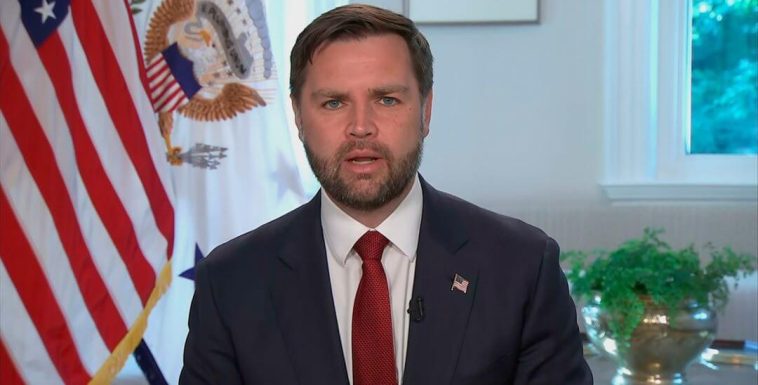
Speaking with NBC’s Kristen Welker, Vance didn’t flinch: “What we did is we destroyed the Iranian nuclear program. I think we set that program back substantially.”
Vance highlighted the heroism and skill of American pilots who carried out the mission — flying non-stop for over 30 hours to deliver 30,000-pound bombs with near-perfect precision.

These weren’t just any bombs. They were GBU-57 “bunker-busters”, specifically built to smash through Iran’s underground nuclear bunkers — including the infamous Fordow site, buried under tons of rock and reinforced concrete.
Vance praised the pilots for executing flawlessly and returning home safely without ever landing on foreign soil.
Military analysts have long claimed only the United States possesses weapons powerful enough to penetrate facilities like Fordow.

Satellite imagery after the strike supports that claim.
David Albright, president of the Institute for Science and International Security, told CNN: “A considerable amount of damage could have been done to the enrichment hall and adjacent halls that provide support to enrichment.”
He added: “Total destruction of the underground hall is quite possible.”
In Isfahan, aerial footage showed at least 18 buildings either flattened or severely damaged. Iran’s nuclear ambitions didn’t just take a hit — they were buried under the rubble.
While Vance avoided revealing classified intelligence, he didn’t hold back on describing the operation’s success.
“I feel very confident that we’ve substantially delayed their development of a nuclear weapon, and that was the goal of this attack,” he said.
“It’s going to be many, many years before the Iranians are going to be able to develop a nuclear weapon.”
And then came the warning shot across Iran’s bow.
“My message to the Iranians is it would be the stupidest thing in the world,” Vance said about the possibility of a counterattack.
“If the Iranians want to enlarge this by attacking American troops, I think that would be a catastrophic mistake.”
Vance was crystal clear: any assault on American personnel would be met with “overwhelming force.”
According to Vance, this strike didn’t come out of nowhere. The Trump administration exhausted diplomatic channels and gave Iran every opportunity to stand down.
“Diplomacy never was given a real chance by the Iranians,” Vance explained.
Eventually, President Trump had enough — and issued a private ultimatum. Iran ignored it. Now, they’re paying the price.
“There is no way that the United States is going to let Iran have a nuclear weapon,” Vance declared.
Tehran can either re-enter civilized society and give up its nuclear program — or continue to walk down the road to ruin.
“If they’re willing to choose the smart path, they’re certainly going to find a willing partner in the United States to dismantle that nuclear weapons program.”
Iran’s Revolutionary Guard issued a furious statement, accusing the U.S. of “aggression” and promising vague “regrettable responses.”
But the reality is obvious: Trump’s strike hit its mark, and Iran now knows this isn’t Obama’s Washington anymore.
“The Iranians are clearly not very good at war,” Vance added with a jab. “Perhaps they should follow President Trump’s lead and give peace a chance.”
Bottom line: The Trump administration just redrew the map — and Iran must now decide whether to disarm or face the wrath of a president who’s not afraid to act.
The clock is ticking.

