
>> Continued From the Previous Page <<
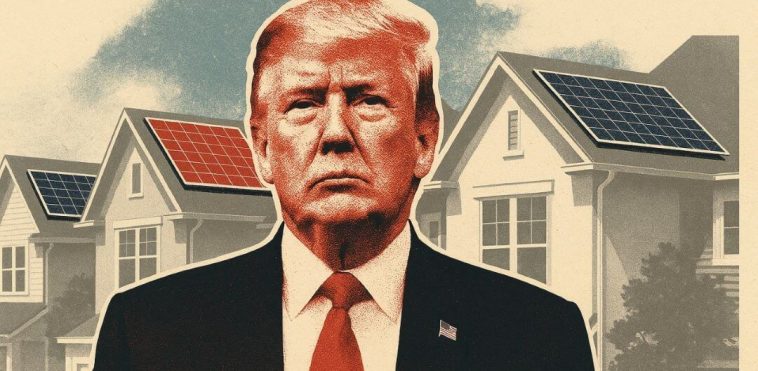
Worse still for solar giants, the bill wipes out incentives for utility-scale projects in solar, wind, and battery storage unless they break ground within 60 days of passage and finish by 2028. The move triggered a market meltdown: Sunrun nosedived 41%, SolarEdge fell 26%, and Enphase Energy took a 17.7% hit overnight.
Corporate Welfare No More

For years, the solar sector operated under a safety net — propped up by hefty taxpayer dollars, it became less a marketplace competitor and more a government pet project. Homeowners were lured into deals with a 30% tax credit on installations, funded entirely by taxpayers. But Trump’s bill brings that era to a grinding halt.
Industry lobbyists aren’t taking it lightly. Abigail Ross Hopper, president of the Solar Energy Industries Association, warned, “If Congress does not change course, this legislation will upend an economic boom in this country.”
Critics find the panic laughable. After all, the “boom” was bankrolled not by innovation, but by government handouts. Meanwhile, analysts like those at Rhodium Group claim energy prices could rise by 7% — but they leave out the part where taxpayers already footed the bill for inflated land deals and bloated subsidies.
Farming Lost, Land Grab Gained
The real-world impact of solar sprawl is becoming impossible to ignore. Developers have been offering up to $1,000 per acre for farmland, a massive jump from the typical $200 lease for agriculture. But that money didn’t come from market strength — it came from Washington.
These offers have tempted struggling farmers into surrendering family land. Gary Abernathy, a columnist who attended solar hearings in Ohio, recalled, “tears in their eyes” as farmers explained why they were leasing to solar developers. “It’s been a long time since the world was perfect” for agriculture, one said.
More than 1.25 million acres of farmland have been sacrificed to solar so far. And for what? A California solar farm takes up 3,000 acres to produce what a natural gas plant can deliver on 122. That’s 25 times the land — and all of it dressed up as eco-friendly progress.
A Texas rancher near a 2,400-acre solar installation cut through the PR spin: “They call themselves solar ‘farms,’ which is irritating to me. They give the indication that it’s all bunny rabbits and butterflies over there. And it’s not. It’s 2,400 acres of total destruction.”
The Senate Showdown Awaits
The legislation now heads to the Senate, where Republicans hold a slim 53-47 majority. Some senators are signaling they’ll seek a more gradual wind-down of subsidies. Senator Thom Tillis (R-NC) cautioned, “people are going to start thinking that the United States has massive changes in policy every two years in this space.”
Others worry about job losses in states with solar manufacturing. Still, Speaker Mike Johnson vowed to push the bill to Trump’s desk by July 4, declaring it a celebration of American independence from government-fueled energy dependence.
“The success of ‘alternatives’ should be based on merit,” Abernathy noted. “Are they affordable? Are they effective? Are they reliable? Are they in demand?”
That sentiment is spreading. More than 2,600 local restrictions on wind and solar projects have been passed, with public pushback growing louder.
For decades, green energy giants enjoyed a sweetheart deal while taxpayers paid the price. Trump’s latest bill doesn’t just reverse course — it slams the brakes.
It’s time the market — not federal bureaucrats — decided what kind of power fuels America.

