

>> Continued From the Previous Page <<
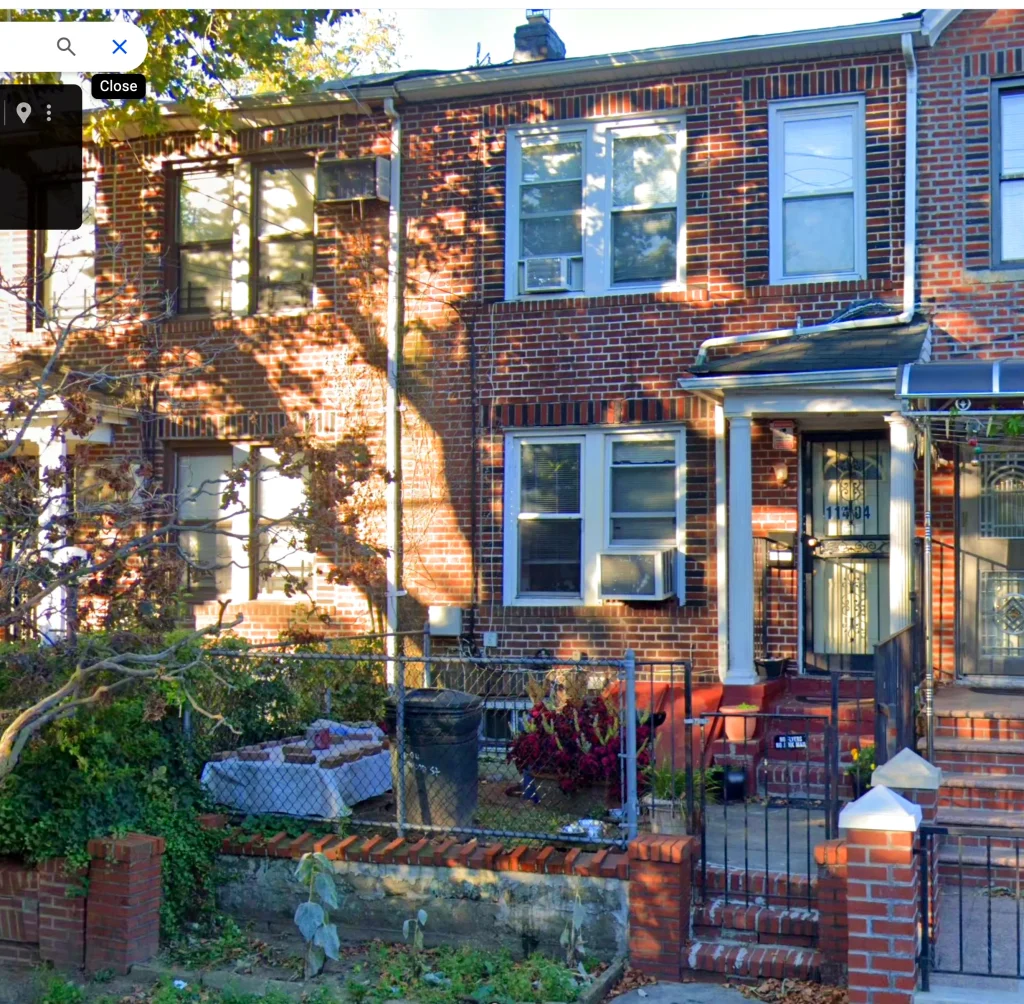
This isn’t the first instance of suspicious real estate dealings involving Letitia James. New evidence has emerged regarding a property she purchased in 1983 with her father, Robert James.
At the time, Letitia was a 24-year-old graduate of CUNY’s Lehman College, living with her parents in Brooklyn. She had not yet started law school at Howard University. Despite likely having little to no income, James and her father obtained a $30,300 real estate loan from Kadilac Funding Ltd.

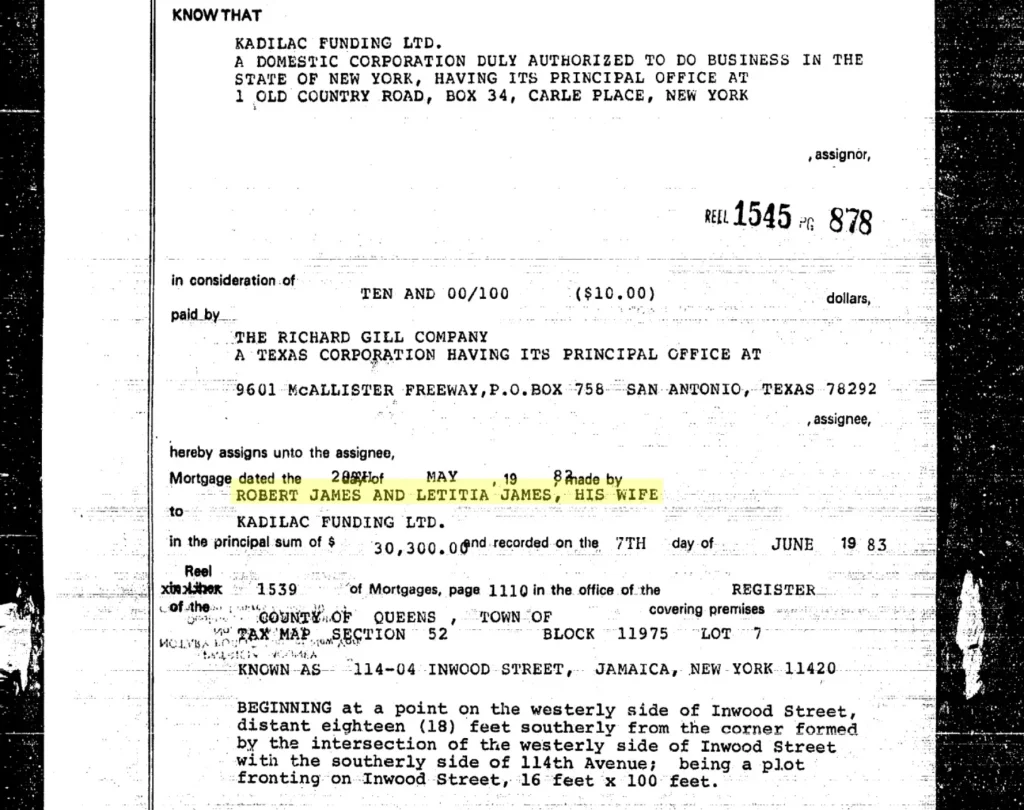
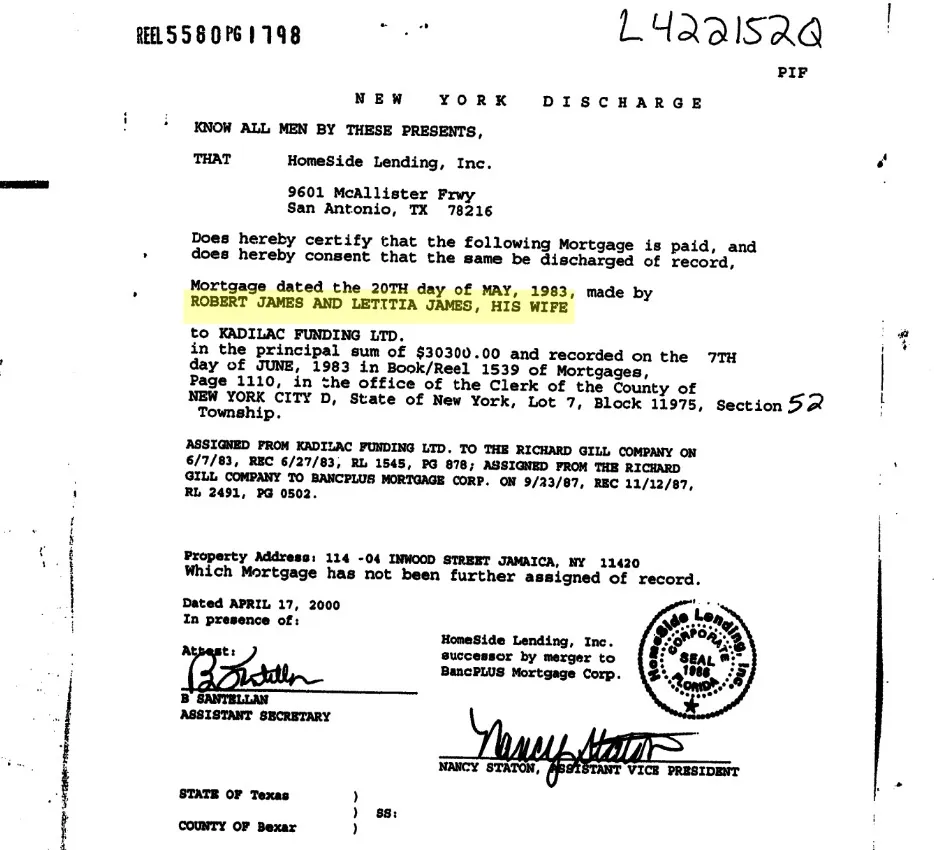
Records from the New York City Department of Finance reveal a shocking detail: on the loan application, Letitia and Robert James identified themselves as “husband and wife.” This designation appears at the top of the loan document and again on the signature page, which reads:
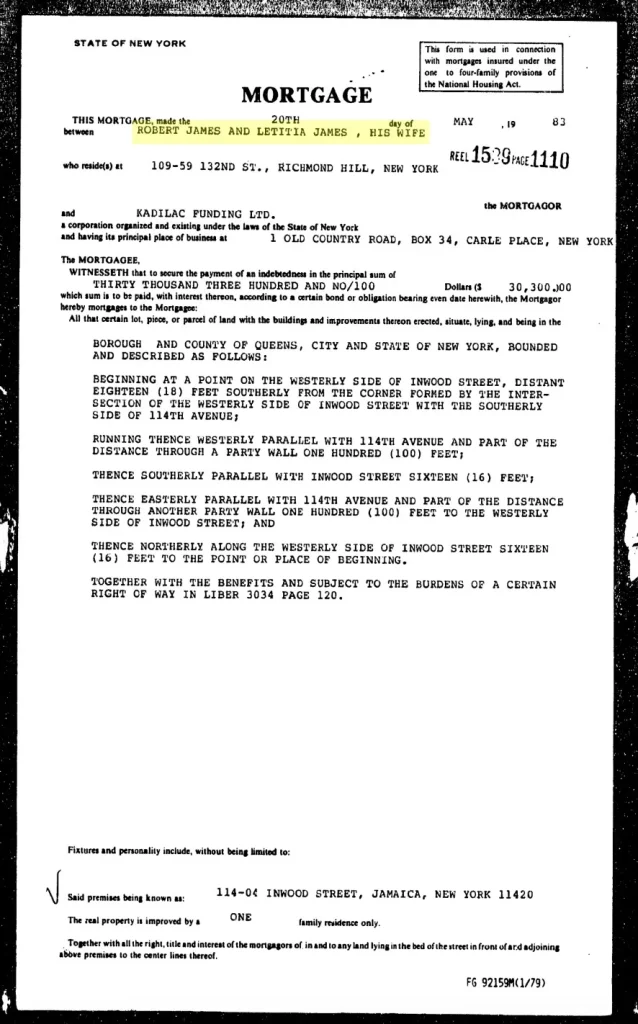
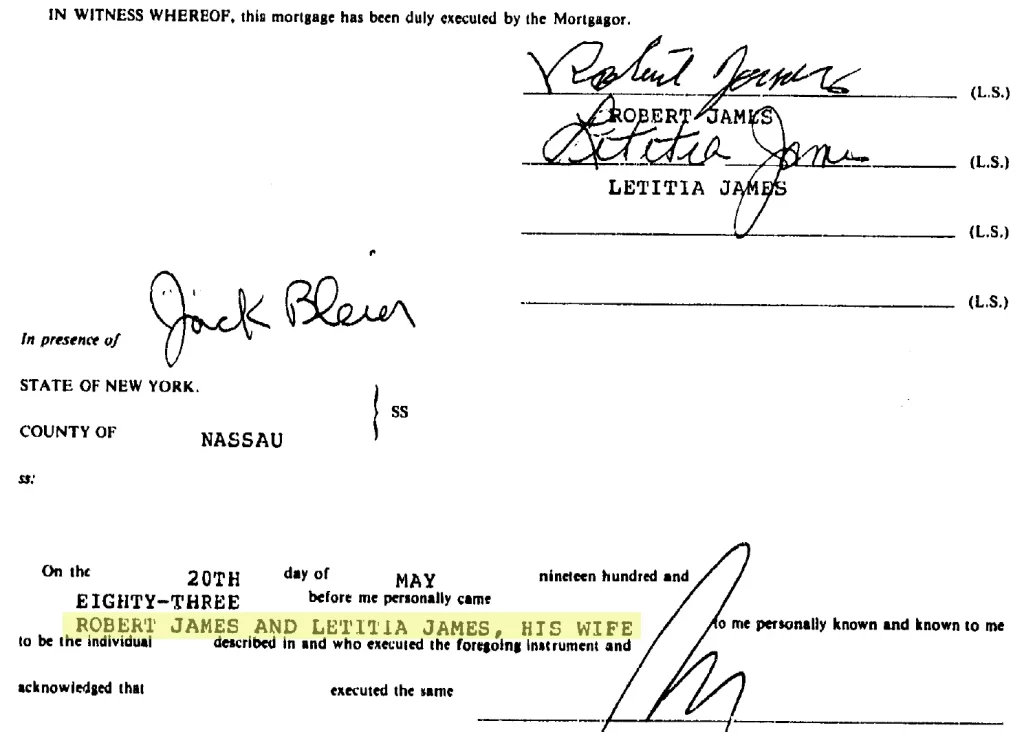
“ROBERT JAMES AND LETITIA JAMES, HIS WIFE.”
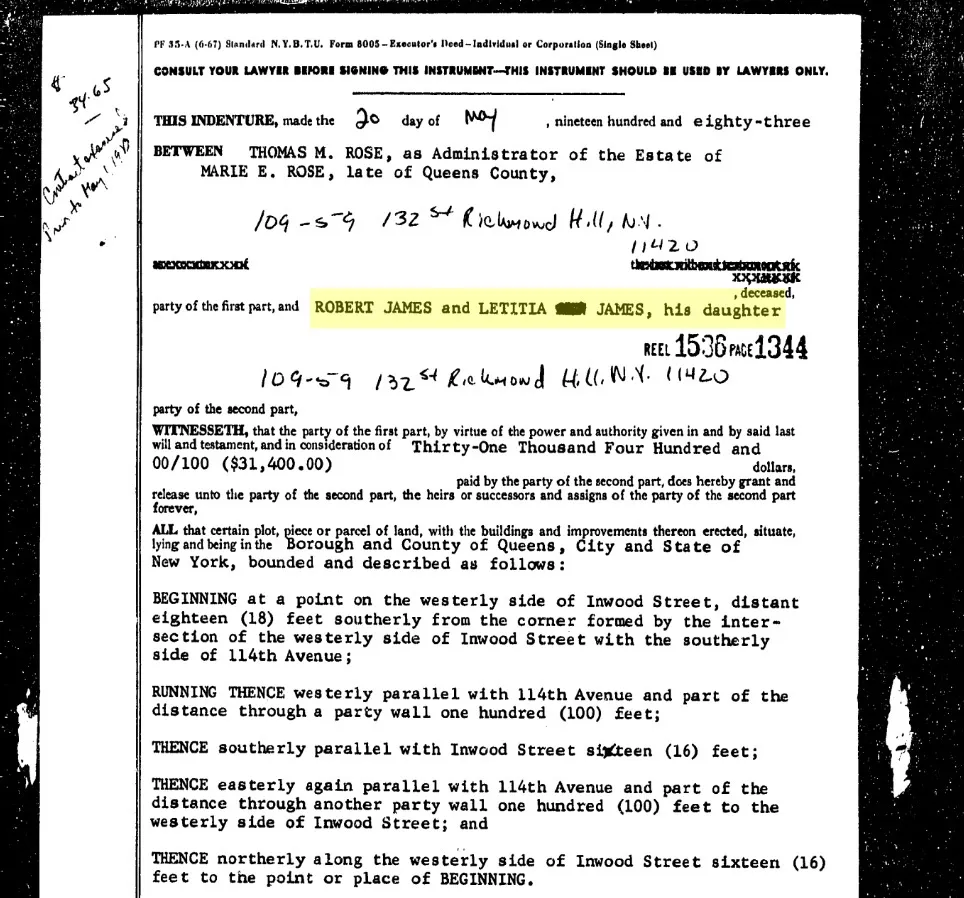
However, the deed executed the same day correctly lists them as “father and daughter.” This glaring contradiction raises serious concerns—did James and her father intentionally misrepresent their relationship to secure better loan terms?
There are only two possible explanations, and neither is good for James. Either:
- Letitia and her father knowingly lied to the lender, committing mortgage fraud by fabricating a marital relationship.
- Or, in an outrageous scenario, Letitia actually married her father to make the claim legally true—which, of course, is highly improbable and would itself be fraudulent.
Adding further to the scandal, when the loan was later assigned to another lender, Letitia and Robert James were still listed as “husband and wife.” Even when Letitia sold the property in 2000, the deed continued to misrepresent their relationship.
Just Released: Trump White House Collector’s Bobblehead!
Falsely representing oneself on mortgage documents is a serious crime under federal and state law. Mortgage fraud includes:
- False Representation: Providing misleading or incorrect information on a loan application.
- Misrepresentation of Relationship: Lying about marital status to obtain better loan terms.
Potential penalties include hefty fines, civil lawsuits, criminal charges, and even prison time.
In February 2024, Letitia James spearheaded a fraud case against Donald Trump, accusing him of inflating his assets for better financial deals. Despite no clear victim in Trump’s case, James relentlessly pursued him, securing a massive judgment against him and his company.
During her victory speech, she proclaimed:
“When powerful people cheat to get better loans, it comes at the expense of honest and hardworking people.”
James also stated:
“Everyday Americans cannot lie to a bank to get a mortgage to buy a home, and if they did, our government would throw the book at them. No matter how big, rich, or powerful you think you are, no one is above the law.”
Yet, if the mortgage documents are accurate, it appears James did exactly what she accused Trump of doing—lying to obtain better financial terms at the expense of others.
James has made it clear that she believes no one is above the law. If that’s the case, will she face the same legal scrutiny she imposed on Trump? Will the New York Attorney General’s Office investigate its own leader for the very crime she built her career on prosecuting?
If the law applies equally, Letitia James may soon have to answer for her own actions—just as she demanded from Trump. After all, as she herself declared, “No one is above the law.”

